EH-440 | Keyence ES Series Proximity Sensor Head, 36 mm
PLC
- Brand: Keyence
- Part Number:
EH-440 - Availability: Ask for quote
Keyence EH-440 separate-amplifier proximity sensor head: ø40 non-shielded, 36 mm max detection, 0.037 mm repeatability, IP67. Genuine parts at competitive prices.
Product Details
Product Introduction
For decades, industrial sensing followed a predictable pattern: a single, self-contained sensor did one job, and when a production line needed to change, the whole sensing architecture changed with it. As factories evolved toward flexible manufacturing, that rigidity became a bottleneck. Engineers needed sensing systems that could be adapted, upgraded, and maintained without ripping out entire installations. The separate-amplifier architecture emerged as a direct answer to that challenge, and the Keyence EH-440 is a mature expression of the concept.
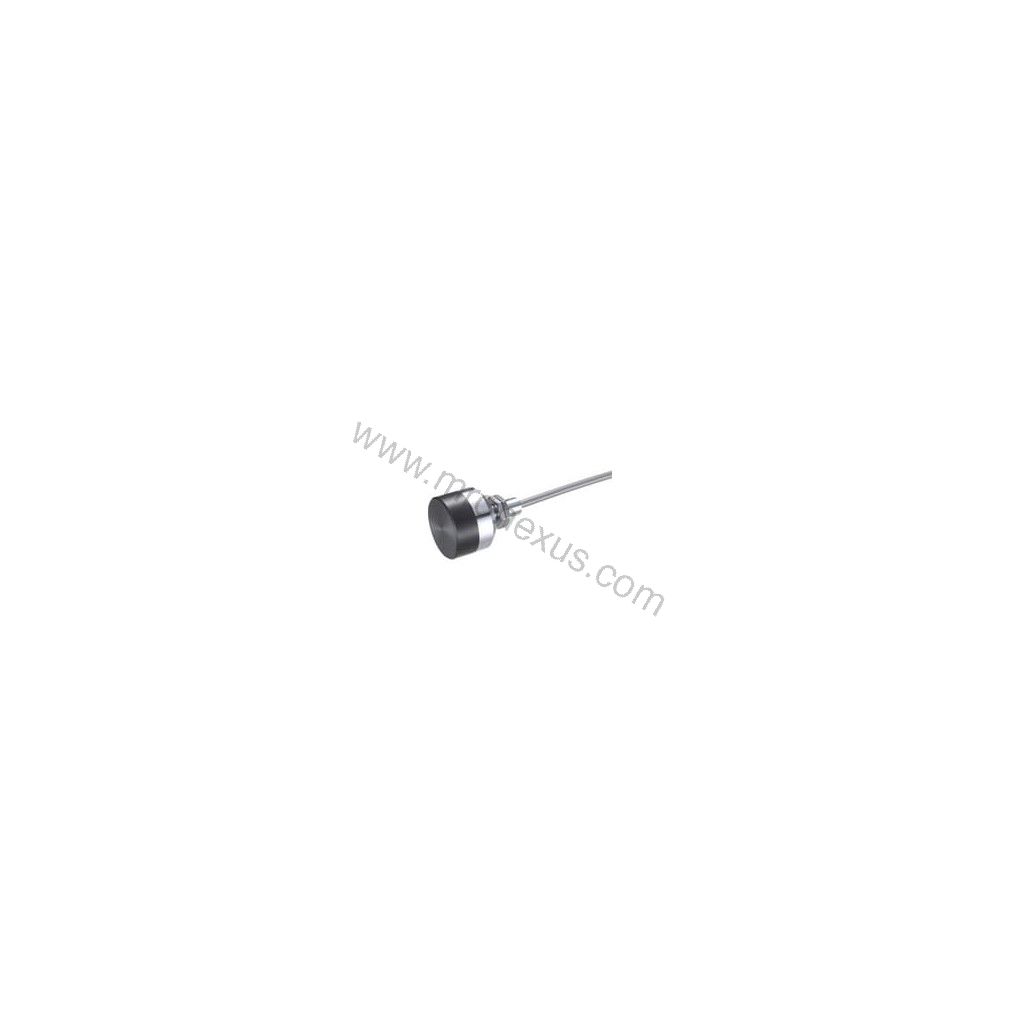
The EH-440 is a passive sensor head from Keyence’s ES series. It contains no amplifier electronics of its own; instead, it connects via a dedicated cable to an ES-32DC separate amplifier unit, which supplies power and processes the signal. This division of labor means the sensing head can be mounted in tight, harsh, or high-vibration locations while the amplifier sits in a protected cabinet. For engineers sourcing reliable industrial automation parts, the EH-440 offers a practical way to standardize sensing across a line without over-specifying every node.
Key Features & Technical Specifications
- Sensor type: Separate-amplifier proximity sensor head, standard non-shielded ø40 cylindrical and threaded design.
- Detectable object: Ferrous metals; refer to the official characteristics data for nonferrous metal derating.
- Standard target: 40 × 40 mm iron target at 1 mm thickness.
- Stable detecting range: 0 to 18 mm, with a maximum detecting distance of 36 mm.
- Hysteresis: 0.1 mm, supporting consistent switching points in position-sensing tasks.
- Repeatability: 0.037 mm, enabling precise part-presence and positioning feedback.
- Operating temperature: -10 to +60 °C, no freezing; temperature characteristics within ±10% of detecting distance at 23 °C.
- Relative humidity: 35 to 85% RH, no condensation.
- Protection rating: IP67, suitable for washdown-adjacent and dusty environments.
- Weight: Approx. 280 g including nuts and 3 m cable.
- Supply voltage and power consumption: Not applicable; the head is powered by the ES series amplifier.
- Communication protocol: Not available; the EH-440 is a passive sensor head with no built-in ports or expansion.
The standout specification is the 0.037 mm repeatability combined with a 36 mm maximum detecting distance. In practice, this means the EH-440 can monitor large ferrous targets—such as steel platens, die components, or heavy fixtures—at a working distance where mechanical wear and tolerance stack-up would normally degrade signal consistency. The result is fewer nuisance trips and more stable machine sequencing.
Applications & Use Cases
Because the EH-440 is a passive head, its applications are defined by where the ES-32DC amplifier can be installed and where a robust ø40 sensor can be mounted. In stamping and press lines, the head is often used to confirm the presence and seated position of ferrous blanks before a cycle initiates; the 36 mm maximum distance allows mounting outside the immediate crush zone. In automotive assembly, the IP67 rating and -10 to +60 °C operating range support presence detection on weld fixtures and conveyor pallets where coolant mist and temperature swings are routine. For heavy equipment manufacturers, the non-shielded ø40 form factor provides a generous sensing face that tolerates target misalignment, while the separate amplifier keeps sensitive electronics away from vibration. In each case, the value is not just detection—it is the ability to replace or reposition the head without re-engineering the amplifier cabinet, a direct contributor to lower lifecycle cost.
Compatibility & Integration
The EH-440 is designed specifically for the Keyence ES series separate amplifier, with the ES-32DC being the referenced amplifier unit. It connects via a dedicated cable; no third-party amplifier should be assumed compatible without confirmation. The head has no built-in communication ports or fieldbus protocols, so it does not connect directly to PROFINET, EtherNet/IP, or other industrial networks. Where network-level sensor data is required, the amplifier’s output must be integrated through the control system or an external gateway. Integration Note: wiring into fieldbus networks may require an external gateway or connection module; confirm cable and gateway compatibility with the supplier before commissioning. For engineers standardizing on the ES series, the EH-440 is a straightforward drop-in head replacement—one more reason to source genuine parts at competitive prices from a single, reliable channel.
Maintenance & Reliability
The EH-440 has no moving parts and no internal electronics to drift, so maintenance is primarily mechanical and environmental. Inspect the sensing face for adhered metal particles, especially in grinding or machining cells, since ferrous debris can alter the effective detecting distance. Check the mounting nuts and threaded body for loosening under vibration; the approximate 280 g weight including cable means strain relief should be verified periodically. The IP67 rating protects against dust and water jets, but the cable entry and connector should be inspected for cuts or pulled conductors. Operating within the -10 to +60 °C range and 35 to 85% RH non-condensing limits will preserve the published temperature characteristics of ±10% detecting distance. Because the head is passive, Mean Time Between Failures is dominated by cable and mounting integrity rather than semiconductor wear—an important reliability advantage in high-cycle applications.
Troubleshooting & Common Issues
Most field issues trace to three causes: target material, mounting distance, and cable integrity. If detection becomes intermittent, first confirm the target is ferrous; nonferrous metals require derating per the official characteristics data. Second, verify the target is within the 0 to 18 mm stable range and does not exceed the 36 mm maximum distance; a target at the edge of the range may chatter with temperature variation. Third, inspect the dedicated cable for pinch points or shield damage, and confirm the connection to the ES-32DC amplifier is secure. If the amplifier indicates a fault, swap the head with a known-good unit to isolate whether the issue is in the head or the amplifier. For persistent faults, refer to official Keyence documentation or contact Mronexus for genuine replacement parts.
Product Support & Availability
The EH-440 is part of the current ES series product line and is not marked discontinued as of the last verification. Mronexus maintains stock of genuine Keyence sensor heads and related automation components, with worldwide shipping and fast delivery from stock. For engineers who need one-stop sourcing across PLC, HMI, servo, sensor, and circuit breaker categories, Mronexus is your one-stop sourcing base. Contact Mronexus for genuine industrial automation parts and confirm current availability for your project timeline.
FAQ
Q: What amplifier does the Keyence EH-440 require?
A: The EH-440 is a passive sensor head designed for the Keyence ES series separate amplifier, specifically the ES-32DC unit referenced in the product data. It connects via a dedicated cable and receives power from the amplifier.
Q: Can the EH-440 detect nonferrous metals?
A: The standard detectable object is ferrous metal. Nonferrous metals can be detected but require derating; refer to the official Keyence characteristics data for specific reduction factors before specifying the sensor for aluminum, brass, or stainless steel targets.
Q: What is the maximum sensing distance and repeatability?
A: The maximum detecting distance is 36 mm, with a stable detecting range of 0 to 18 mm using a 40 × 40 mm iron target at 1 mm thickness. Repeatability is 0.037 mm and hysteresis is 0.1 mm.
Q: Does the EH-440 support fieldbus communication?
A: No. The EH-440 is a passive sensor head with no built-in ports or communication protocols. Network integration is handled at the amplifier or control-system level; an external gateway may be required for fieldbus connectivity.
Q: What are the operating temperature and protection ratings?
A: The operating temperature range is -10 to +60 °C with no freezing, relative humidity 35 to 85% RH non-condensing, and the protection rating is IP67.
Unmatched Customer Service
- After Hours Shipping
- Real Time Order Tracking
- Flexible Delivery Options
- Intact Technical Supports