EH-305S | Keyence ES Series ø5.4 Shielded Proximity Sensor Head
PLC
- Brand: Keyence
- Part Number:
EH-305S - Availability: Ask for quote
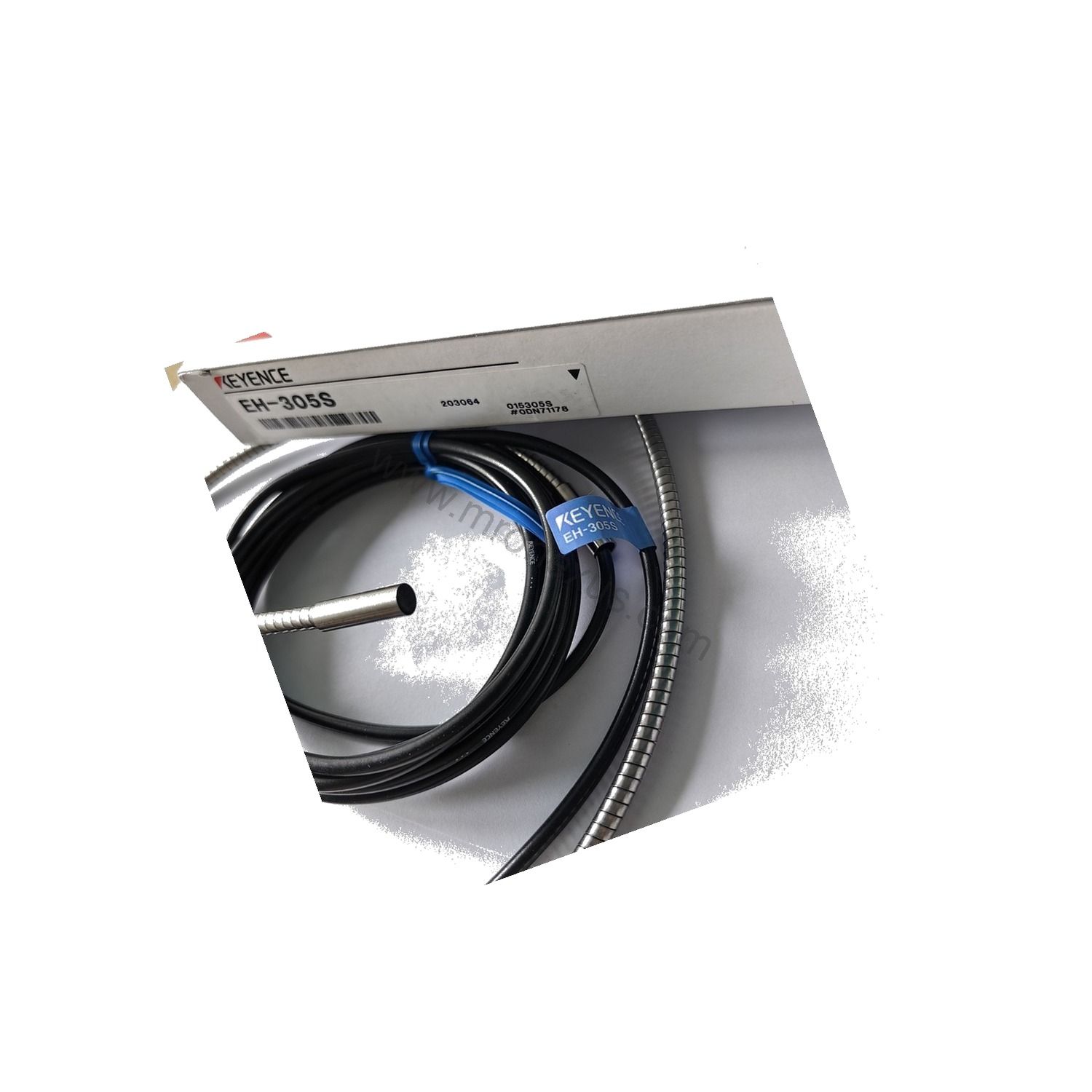
Keyence EH-305S shielded ø5.4 cylindrical proximity sensor head for the ES series amplifier. 0.002 mm repeatability, 3 mm max detecting distance, IP67 rated, -10 to +60 °C.
Product Details
Why the EH-305S Earns Its Place in Tight Fixtures
In high-cycle press, spindle and indexing fixtures, sensing failures rarely come from the sensor element itself. They come from repeatability drift, cable fatigue at the exit point, and coolant ingress. The Keyence EH-305S is a separate-amplifier proximity sensor head built to remove those failure modes from the equation: a shielded ø5.4 mm cylindrical body with a stainless steel spiral tube protecting the lead, paired with the ES series amplifier. It is a passive head — no electronics to configure at the sensing point — which keeps the front end small, mechanically robust and simple to replace.
For maintenance teams and OEM builders sourcing genuine parts at competitive prices, this head is a value-for-money route to Keyence-grade repeatability without changing the amplifier architecture already installed on the machine.
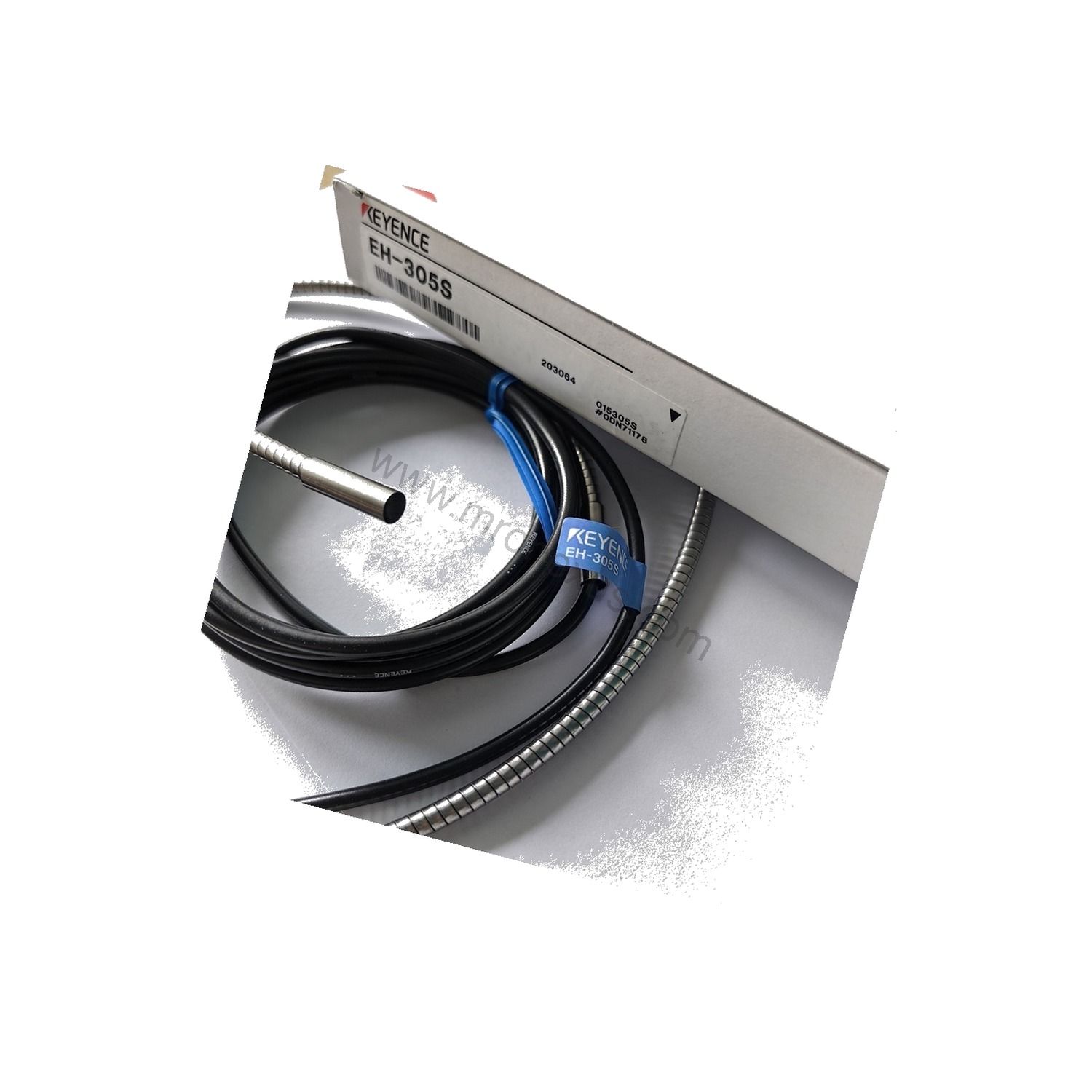
Key Features and Technical Specifications
- Shielded ø5.4 mm cylindrical head with stainless steel spiral tube for cable strain relief.
- Stable detecting range of 0 to 1 mm; maximum detecting distance 3 mm.
- Repeatability of 0.002 mm — the headline spec for precision positioning and pass/fail gauging.
- Hysteresis of 0.05 mm keeps switching points tight across repeated cycles.
- Standard target: 5 × 5 mm iron, 1 mm thick; ferrous metals are the primary detectable object.
- Operating temperature range of -10 to +60 °C, no freezing.
- Relative humidity 35 to 85 % RH, no condensation.
- IP67 protection rating for washdown-adjacent and coolant-exposed fixtures.
- Weight approx. 76 g including the 3 m cable.
- Temperature characteristics: ±10 % max. of detecting distance at 23 °C across the rated range.
What the 0.002 mm repeatability means in practice: on a gauging station checking shaft runout or a fixture confirming a part is fully seated, that figure is the difference between a stable accept/reject decision and nuisance rejects at shift change. Because the head is passive, all sensitivity adjustment happens at the ES-32DC amplifier, away from the measuring point.
Note on electrical data: supply voltage, power consumption and backplane current consumption are not applicable to this head — it draws power from the ES series amplifier. Built-in ports, protocols and communication expansion are likewise not available on a passive sensor head. Refer to the official datasheet for dimensions, which are published as CAD drawings only.
Comparison: EH-305S vs. Alternative Sensing Approaches
- vs. self-contained (amplifier-in-body) proximity sensors: the EH-305S moves adjustment and output electronics to the ES amplifier, giving a smaller head for crowded fixtures and centralised setup — at the cost of a dedicated amplifier and cable run.
- vs. unshielded ø5.4 heads: the shielded construction allows flush mounting in metal fixtures with reduced sensing-distance penalty, which matters when the head must sit inside a steel block.
- vs. larger M8/M12 shielded heads: the ø5.4 body fits where M8 will not, but the 0 to 1 mm stable range demands tighter mechanical targeting.
- vs. laser displacement sensors: far lower cost per point and IP67 robustness, but no analogue distance output — this is a switching device for presence and position confirmation.
- vs. reed or magnetic switches: ferrous-metal detection with micron-level repeatability rather than coarse magnetic actuation.
Typical Applications
The EH-305S suits ferrous-metal presence and position confirmation where space is tight and repeatability is non-negotiable. Typical installations include press die and tooling position checks, spindle and chuck clamp confirmation, small-diameter shaft and pin detection in assembly nests, and end-of-stroke verification on compact pneumatic actuators. In each case the shielded body allows the head to be embedded directly in the fixture block, while the stainless steel spiral tube absorbs the repeated flexing that destroys ordinary cable exits. Where nonferrous targets are involved, confirm behaviour against the ES series characteristics data before specifying.
Installation, Integration and Maintenance
Mount the head flush in a shielded-compatible fixture, keeping the 5 × 5 mm iron standard target in mind when setting the gap: the stable range is 0 to 1 mm, so target the middle of that window and leave margin for thermal movement. Connect the dedicated cable to the ES-32DC amplifier and complete sensitivity setting there. The head carries no fieldbus interface — protocols, ports and communication expansion are not available — so any network integration is handled at the amplifier or PLC input level, not at the sensor.
For reliability, inspect the spiral tube and cable exit at each scheduled maintenance interval, check the sensing face for ferrous swarf adhesion (a common cause of premature switching), and verify the gap after any fixture changeover. The IP67 rating and -10 to +60 °C range cover most machine-tool environments, but the ±10 % detecting-distance drift across temperature means precision gauging stations should be re-verified after prolonged thermal soak.
Availability
The EH-305S is part of the current ES series line and is not marked discontinued. In stock and ready to ship from Mronexus, alongside PLC, HMI, servo, sensor and circuit breaker lines — your one-stop sourcing base for automation spares. Contact Mronexus for genuine industrial automation parts.
FAQ
Q: Does the EH-305S work without an amplifier?
A: No. It is a passive sensor head powered by the ES series amplifier, specifically the ES-32DC, via a dedicated cable. Supply voltage and power consumption are not applicable to the head itself.
Q: What repeatability and hysteresis does it offer?
A: Repeatability is 0.002 mm and hysteresis is 0.05 mm, with a stable detecting range of 0 to 1 mm and a maximum detecting distance of 3 mm using a 5 × 5 mm iron target.
Q: Can it detect nonferrous metals?
A: The primary detectable object is ferrous metal. Behaviour with nonferrous targets is covered in the ES series characteristics data — refer to official Keyence documentation before specifying.
Q: What environmental conditions does it tolerate?
A: Operating temperature -10 to +60 °C without freezing, humidity 35 to 85 % RH without condensation, and IP67 protection. Detecting distance may vary by up to ±10 % across the rated temperature range.
Unmatched Customer Service
- After Hours Shipping
- Real Time Order Tracking
- Flexible Delivery Options
- Intact Technical Supports